Course Overview:

This course is designed for professionals that are expected to do malware analysis. A skills focus enables the student to better absorb the subject matter and perform successfully on the job.   This is not death by power point. The course is aligned with information assurance operators and executing hands-on labs. Lecture and labs walk the student through the knowledge required to truly understand the mechanics Reverse Engineering Malware.

Attendees to TN-999: Reverse Engineering Malware will receive TechNow approved course materials and expert instruction.

Date/Locations:

No Events

Duration: 5 days

Course Objectives:

  • Toolkit and Lab Assembly
  • Malware Code and Behavioral Analysis Fundamentals
  • Malicious Static and Dynamic Code Analysis
  • Collecting/Probing System and Network Activities
  • Analysis of Malicious Document Files
  • Analyzing Protected Executables
  • Analyzing Web-Based Malware
  • DLL Construction and API Hooking
  • Common Windows Malware Characteristics in x86 Assembly
  • Unpacking Protected Malware
  • In-Depth Analysis of Malicious Browser Scripts, Flash Programs and Office
  • In-Depth Analysis of Malicious Executables
  • Windows x86 Assembly Code Concepts for Revers-Engineering Memory Forensics for Rootkit Analysis

Prerequisites:

  • Strong understanding of core systems and network concepts
  • Exposure to programming and assembly concepts
  • Comfortable with command line access

Comments

Latest comments from students


User: marcus.osullivan

Instructor comments: Good stuff. I like the beginning half where there was help from an additional instructor to facilitate fixing computer errors that inevitably popped up.

Facilities comments: The baby deer were neat! I like the resort.


Liked the class?  Then let everyone know!

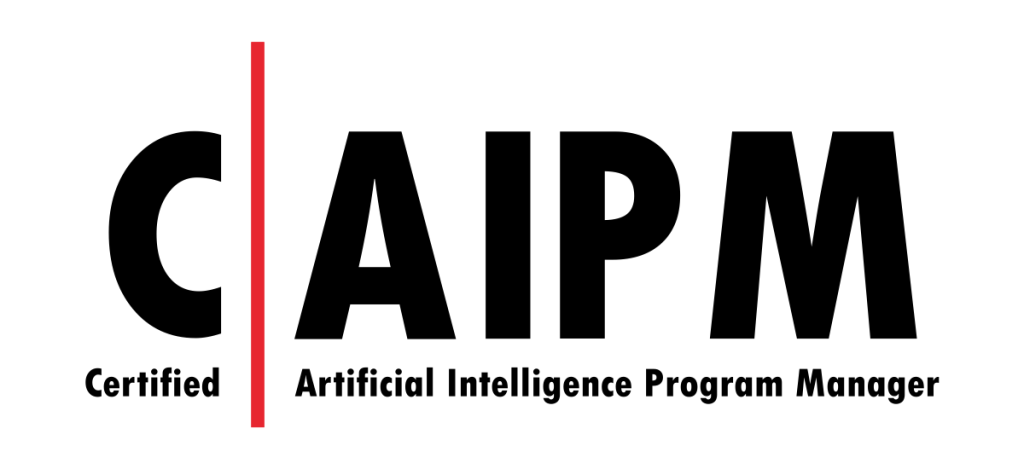
Certified AI Program Manager (CAIPM) is EC-Council’s professional certification for people responsible for owning AI decisions and driving execution: business, technology, data, and risk.

The Certified AI Program Manager (CAIPM) Course equips you with hands-on expertise across the full spectrum of AI tools, from conversational AI and image generation to code assistants and audio synthesis.

Participants will learn how to evaluate, deploy, and integrate AI tools into enterprise workflows, understanding not just how they work, but how to leverage them for maximum business impact. This course covers how to assess AI readiness across teams and processes, Prioritize AI use cases tied to business outcomes, Design adoption and rollout roadmaps , Coordinate delivery across cross-functional teams, implement governance, Responsible AI, and security controls , and how to track performance and ROI to prove value

By the end of the course, learners will be well-prepared to take the Certified AI Program Manager (CAIPM) exam and demonstrate the ability to own AI initiatives end to end , validate mastery of decision framing and trade-off analysis for AI initiatives and Apply governance, ethics, and risk management principles across the AI lifecycle.

Course Objectives:

•MLOps Principles: Model life cycle management for scalable, production-ready AI
•Use Case Evaluation: ROI-driven assessment and prioritization of AI initiatives
•AI Strategy Frameworks: Enterprise AI roadmapping, portfolio planning, and value prioritization
•AI Investment Justification: Quantifying AI value, ROI, and mission impact for funding decisions
•Change Management: Workforce enablement and stakeholder alignment
•KPI Development: AI metrics, success indicators, and executive dashboards
•AI Governance: Risk, ethics, compliance, and responsible AI principles
•Vendor Evaluation: AI platform and tool selection aligned with enterprise needs

Dates/Locations:

No Events

Prerequisites: Familiarity with generative AI concepts, prompt engineering fundamentals, and AI workflows will help you succeed. 

TN-412: Artificial Intelligence Essentials (AI|E)


Course Overview:

TN-542: Establishing a Security Operations Center (SOC) People, Processes, and Technologies is the big picture overview of a SOC, other courses provide a deep dive into the technologies that a SOC may utilize. This course addresses the internal workings of staff, skills required, required authorizations, internal agreements, and setting appropriate expectation levels of a SOC within budget constraints. A SOC is not a one size fits all, the instructor has decades of security experience and brings to the table opportunities to discuss what can work within constraints. Many organizations are coming to the realization that some level of a SOC is now required and to learn just what decisions need to be made: Out-sourced, In-sourced, budgets, capabilities and many more. Students leave with a worksheet of how to progress when they get back to their organization.

TN-542: Establishing a Security Operations Center (SOC) People, Processes, and Technologies – Is a course that incorporates lecture, demos, and group exercises for standing up a Security Operations Center (SOC). Students learn strategies and resources required to deploy, build, and run Network Security Monitoring (NSM) and work roles and flows for a SOC. No network is bullet proof and when attackers access your network, this course will show you options and resources to build a security net to detect, contain, and control the attacker. Examples on what it takes to architect an NSM solution to identify sophisticated attackers and a response strategy. Properly implemented detection and response technologies is integral to incident response and provides the responders timely information and tools to react to the incident. Effective demonstrations are given of Open Source technologies that build up a SOC, but any software can be used and demonstrations are provided to demonstrate technology families not push a specific solution.

TN-542: Establishing a Security Operations Center (SOC) People, Processes, and Technologies demonstrations utilize a cyber range that gives each student in-depth knowledge of monitoring live systems to include: Cisco, Windows, Linux, IoT, and Firewalls; and software and services to provide orchestrate Incident Response, Intelligence Analysis, and Hunt Operations.

Attendees to TN-542: Establishing a Security Operations Center (SOC) People, Processes, and Technologies class will receive TechNow approved course materials and expert instruction.

Dates/Locations:

No Events

Duration: 2 Days

Course Objective:

    • To provide management an overview of what it takes to stand up a SOC.

Prerequisites:

  • Students should have an understanding of the security field.

Course Outline:

  • What threats does my organization care about?
  • What does a threat look like?
  • What does a threat look like?
  • How to present the SOC internally.
  • Communication with Stakeholders and Executives
  • Leveraging and integrating existing security measures
  • People
    • Establishing a skill matrix and work roles for SOC members
    • Establishing a training path
    • Personnel background requirementsProcesses
  • Processes
    • Alignment to standards: NIST, PCI, HIPAA, etc.
    • Risk related decision trees
    • Playbooks
    • Threat Intelligence Integration
  • Technology – Tool Suites to Support:
    • Ethical Hacking
    • Network Security Monitoring and SIEM
    • Forensics
    • Dashboards
    • Analysis and Hunting
    • Incident Management and Ticketing


Comments

Latest comments from students


Liked the class?  Then let everyone know!

Welcome to TechNow! The Leader in Information Security Training & Computer Training.

The world of information security and computer training is ever changing.  The techniques and systems continue to evolve and we must stay current and diligent.  To do this, you can count on TechNow®…the leader in cybersecurity training and computer system training.

TechNow® has been training the leaders in the computer community for many years.  We provide training for students in a number of areas.  Our cybersecurity trainings include popular courses like D0D 8140, Security , CISM, CISSP, CEH,CCNA, and more.  With over 34 years of experience, we’re able to provide you with unmatched training and certification programs.

TechNow also provides a variety of other popular trainings for the computer professional including Cisco, EC-Council, CompTIA, Unix/Linux and more.

.

Upcoming Events

in   


Course Overview:

PenTest+ is an intermediate-level certification for cybersecurity professionals who are tasked with penetration testing to identify, exploit, report, and manage vulnerabilities on a network. PenTest+ is at the same certification level as CT-395: CySA+. Depending on your course of study, PenTest+ and CySA+ can be taken in any order, but typically follow the skills learned in CT-325: Security+. PenTest+ focuses on offense through penetration testing and vulnerability assessment while CySA+ focuses on defense through incident detection and response. The most qualified cybersecurity professionals have both offensive and defensive skills. Attend Tech Now training for hands-on, instructor led course to prepare you for the CompTIA PT0-002 exam. This exam is hands-on, performance-based questions and multiple choice, to ensure each candidate possesses the skills, knowledge, and ability to perform tasks on systems.


What’s Included:

  • 5 days of instructor led in classroom training
  • Labs
  • PenTest+ Courseware
  • Exam Voucher
  • PenTest+ onsite exam scheduling

Course Objectives:

  • Plan and scope penetration tests
  • Conduct passive reconnaissance
  • Perform non-technical tests to gather information
  • Conduct active reconnaissance
  • Analyze vulnerabilities
  • Penetrate networks
  • Exploit host-based vulnerabilities
  • Test application
  • Complete post-exploit tasks
  • Analyze and report pen test results

Dates/Locations:

No Events

Duration: 5 Days

Course Content:

    • Module 01. Planning and Scoping Penetration Tests
    • Module 02. Conducting Passive Reconnaissance
    • Module 03. Performing Non-Technical Tests
    • Module 04. Conducting Active Reconnaissance
    • Module 05. Analyzing Vulnerabilities
    • Module 06. Penetrating Networks
    • Module 07. Exploiting Host-Based Vulnerabilities
    • Module 08. Testing Applications
    • Module 09. Completing Post-Exploit Tasks
    • Module 10. Analyzing and Reporting Pen Test Results


Prerequisites:

Target Audience:

This course is designed for cybersecurity professionals tasked with penetration testing and vulnerability management.

Comments

Latest comments from students


Liked the class?  Then let everyone know!